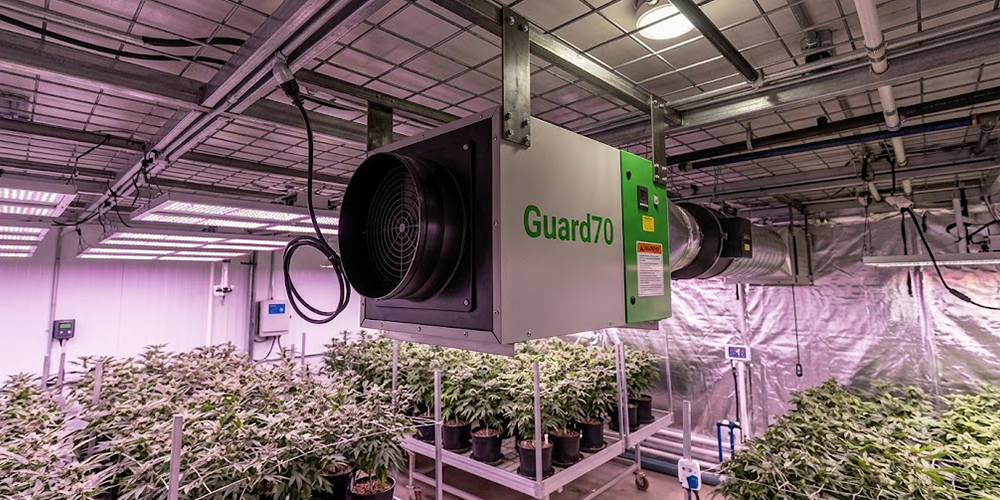
A grow room dehumidifier is needed when indoor humidity levels exceed the ideal range for plant growth or when plants release more moisture than the ventilation system can remove. Proper humidity control helps prevent mold, improve plant health, and maintain stable growing conditions.
The most common reason to install a dehumidifier is consistently high RH.
Recommended humidity ranges vary by plant type and growth stage, but typical indoor cultivation targets are:
|
Growth Stage |
Recommended RH Range |
|
Seedling / Clone Stage |
65–75% RH |
|
Vegetative Stage |
50–70% RH |
|
Flowering Stage |
40–55% RH |
|
Late Flower / Harvest |
35–45% RH |
If humidity remains above these levels for extended periods, a dedicated dehumidifier is usually required.
Plants naturally release water vapor through transpiration. As the number and size of plants increase, moisture output can exceed the capacity of:
Exhaust fans
HVAC systems
Air conditioners
Ventilation equipment
A mature indoor grow room may generate significant moisture, especially during the flowering stage when plants have large leaf surfaces and high water consumption.
High humidity creates conditions favorable for:
Powdery mildew
Botrytis (bud rot)
Root problems
Fungal diseases
Warning signs include:
White powder on leaves
Gray or brown mold spots
Musty odors
Condensation on walls or equipment
A grow room dehumidifier helps maintain a drier environment and reduces disease risk.
You may need a grow room dehumidifier if you notice:
Water droplets on walls
Moisture on ventilation ducts
Wet floors
Condensation on lights or electrical equipment
Condensation often occurs when warm, humid air contacts cooler surfaces.
Air conditioners remove some moisture while cooling, but they may not dehumidify effectively when:
The room temperature is already low
The AC runs for short cycles
Night temperatures drop
Plants require different temperature and humidity settings
A dedicated dehumidifier provides independent humidity control.
Sealed grow rooms often require dehumidifiers because there is little or no outside air exchange.
A sealed environment typically needs:
Dehumidification
CO₂ management
Air circulation
Temperature control
Without moisture removal, RH can rise quickly after irrigation or during plant transpiration.
Humidity often increases at night because:
Plant transpiration continues
Cooling systems reduce operation
Temperature drops, raising relative humidity
Many growers use dehumidifiers during the dark cycle to prevent nighttime humidity spikes.
Important factors include:
Moisture Removal Capacity
Choose based on:
Grow room size
Number of plants
Climate
Lighting power
Ventilation rate
Common capacities:
|
Grow Room Size |
Suggested Capacity |
|
Small tent |
20–50 PPD |
|
Small indoor grow room |
50–100 PPD |
|
Commercial cultivation room |
100–500+ PPD |
A good grow room dehumidifier should work efficiently around:
60–90°F (15–32°C)
Continuous Drainage
Commercial units should support:
Gravity drainage
Pump drainage
Automatic condensate removal
Airflow Design
Good air distribution prevents humid zones around:
Plant canopies
Corners
Storage areas
Best locations:
For large grow rooms, multiple smaller units can sometimes provide better humidity distribution than one oversized machine.
You need a grow room dehumidifier when:
RH stays above the recommended range
Plants produce more moisture than ventilation removes
Mold or mildew risk increases
Condensation appears
You operate a sealed grow room
Humidity rises during the dark cycle
Precise VPD control is required
For commercial indoor cultivation, a properly sized dehumidification system is often as important as lighting and irrigation because humidity directly affects plant growth, disease prevention, and yield quality.
 Hangzhou Hongtai Electrical Appliance Co., Ltd.
 info@seedmaxtech.com

