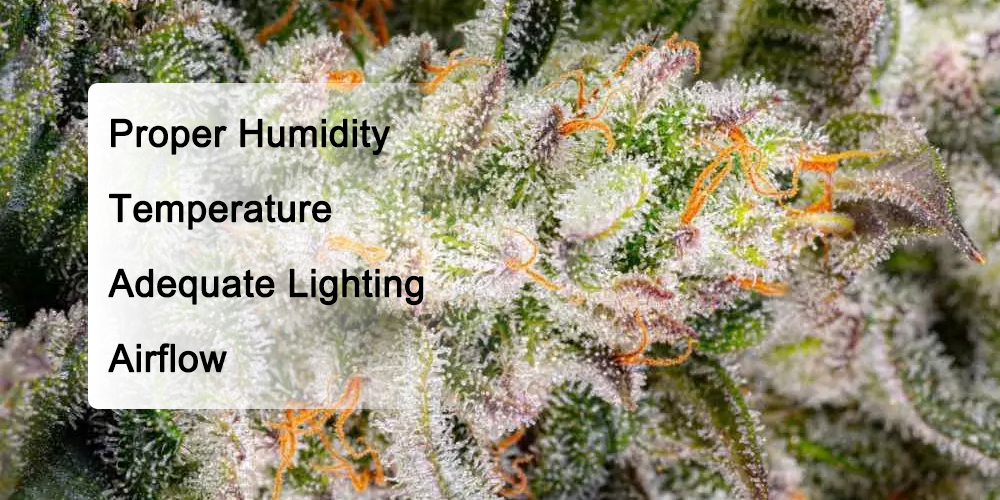
One of the most exciting stages of the cannabis flowering cycle is bud swelling. During the final weeks before harvest, buds increase in size, density, and resin production, signaling that the plant is approaching maturity. Recognizing the symptoms of bud swelling helps growers optimize environmental conditions, adjust nutrients, and determine the ideal harvest window.
In this guide, we'll explain the most common bud swelling symptoms, what causes buds to swell, and how to support healthy flower development.
Bud swelling is the stage in late flowering when cannabis flowers rapidly gain weight and density. Rather than producing new flower sites, the plant directs its energy toward enlarging existing buds.
This process typically occurs during the last 2–4 weeks before harvest, depending on the strain and growing conditions.
The most obvious symptom is a visible increase in bud size.
You may notice:
Flowers becoming thicker
Greater bud volume
More tightly packed calyxes
Heavier branches
Some cultivars can increase their bud mass significantly during the final weeks of flowering.
The calyx is the small, teardrop-shaped structure that makes up much of the flower.
Healthy swelling results in:
Larger calyxes
More compact flower structure
Increased bud density
A fuller appearance
This is one of the strongest indicators that buds are maturing.
As buds swell, resin glands (trichomes) become more abundant.
You'll observe:
Frosty white coating
Sticky flowers
Increased resin production
Stronger aroma
Trichomes contain cannabinoids and terpenes, making them a key indicator of flower maturity.
Maturing buds produce higher concentrations of terpenes.
The smell becomes:
More intense
More strain-specific
Easier to detect throughout the grow room
A sudden increase in fragrance often accompanies rapid bud development.
Early in flowering, pistils are usually bright white.
As buds mature:
Pistils turn orange, amber, or brown
Pistils begin curling inward
Fewer new white hairs appear
While pistil color alone should not determine harvest time, it often coincides with bud swelling.
Immature flowers are relatively soft.
During swelling:
Buds become denser
Flowers feel heavier
Branches may begin bending under the increased weight
Support stakes or trellis netting may be needed for larger plants.
Toward the end of flowering, fan leaves often fade from green to yellow as the plant reallocates nutrients to the buds.
This natural senescence is common, provided it occurs gradually and is not accompanied by severe deficiency symptoms.
Although timing varies by cultivar, bud swelling generally follows this pattern:
|
Flowering Stage |
Typical Plant Activity |
|
Weeks 1–3 |
Stretching and early flower formation |
|
Weeks 4–6 |
Bud development and resin production |
|
Weeks 6–8+ |
Rapid bud swelling and ripening |
|
Final 1–2 weeks |
Maximum density and cannabinoid maturation |
Always follow the expected flowering period for your specific variety, as some sativa-dominant strains require longer to mature.
Maintaining appropriate relative humidity (RH) is essential.
Recommended RH during late flowering:
Weeks 1–3: 50–60%
Weeks 4–6: 45–50%
Late flowering: 40–45%
Lower humidity during late flowering helps reduce the risk of bud rot while supporting resin production.
Ideal temperatures are generally:
Lights on: 22–26°C (72–79°F)
Lights off: 18–22°C (64–72°F)
Avoid excessive heat, which can reduce flower density and terpene retention.
Flower development depends on sufficient light intensity.
Common indoor lighting options include:
Full-spectrum LED grow lights
High-pressure sodium (HPS) lamps
Ceramic metal halide (CMH) fixtures
Ensure the canopy receives even light without causing heat stress.
Good air circulation:
Reduces moisture pockets
Prevents mold
Strengthens stems
Promotes uniform environmental conditions
Oscillating fans and proper exhaust systems are recommended.
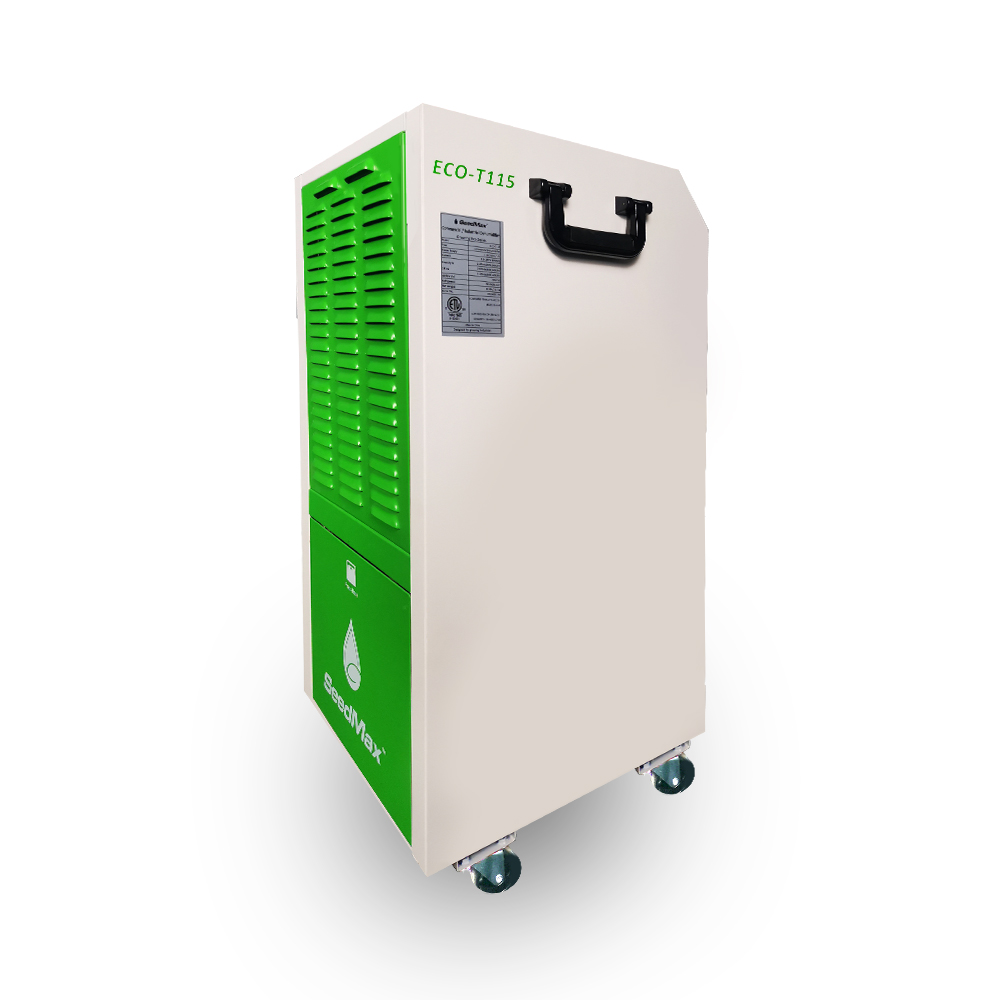
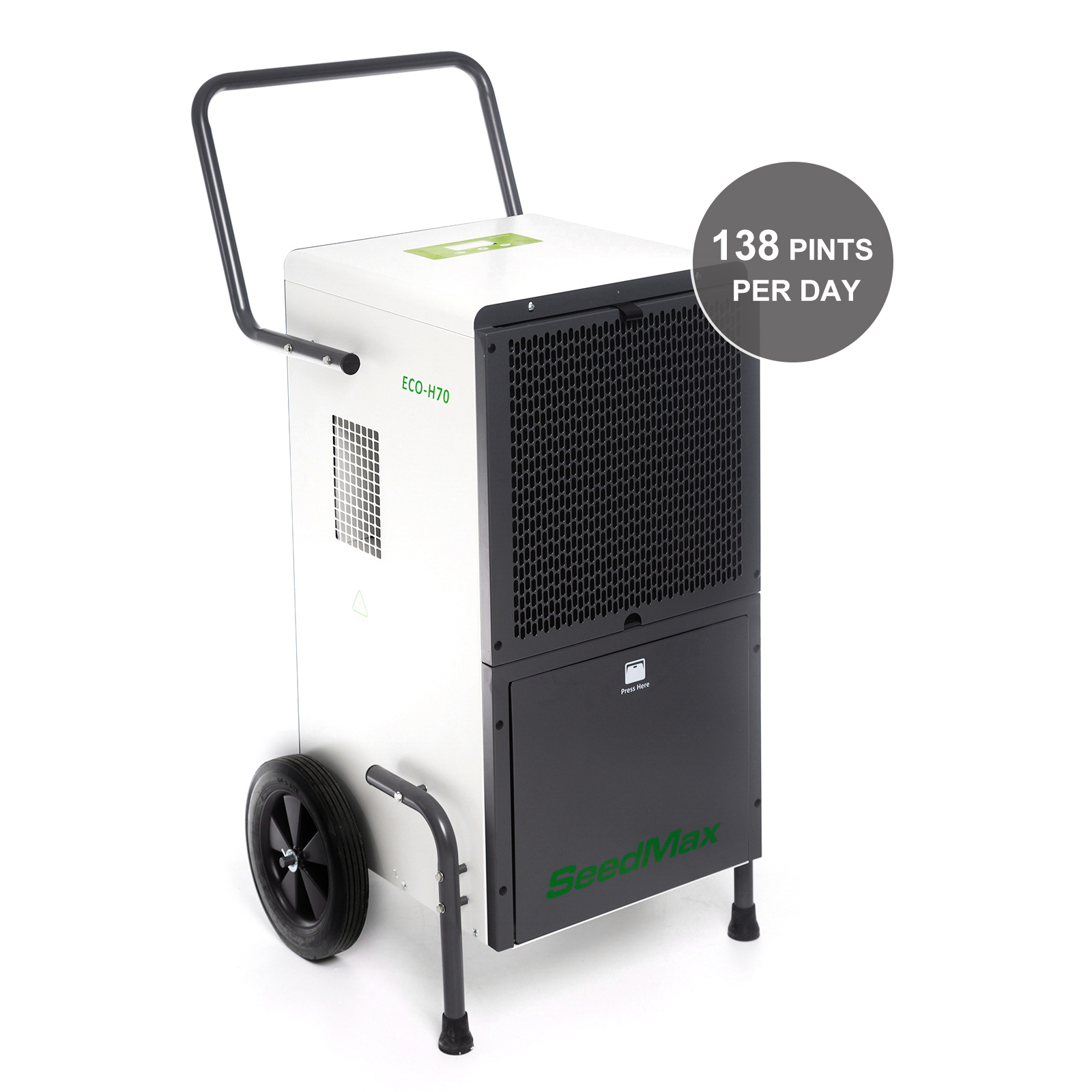
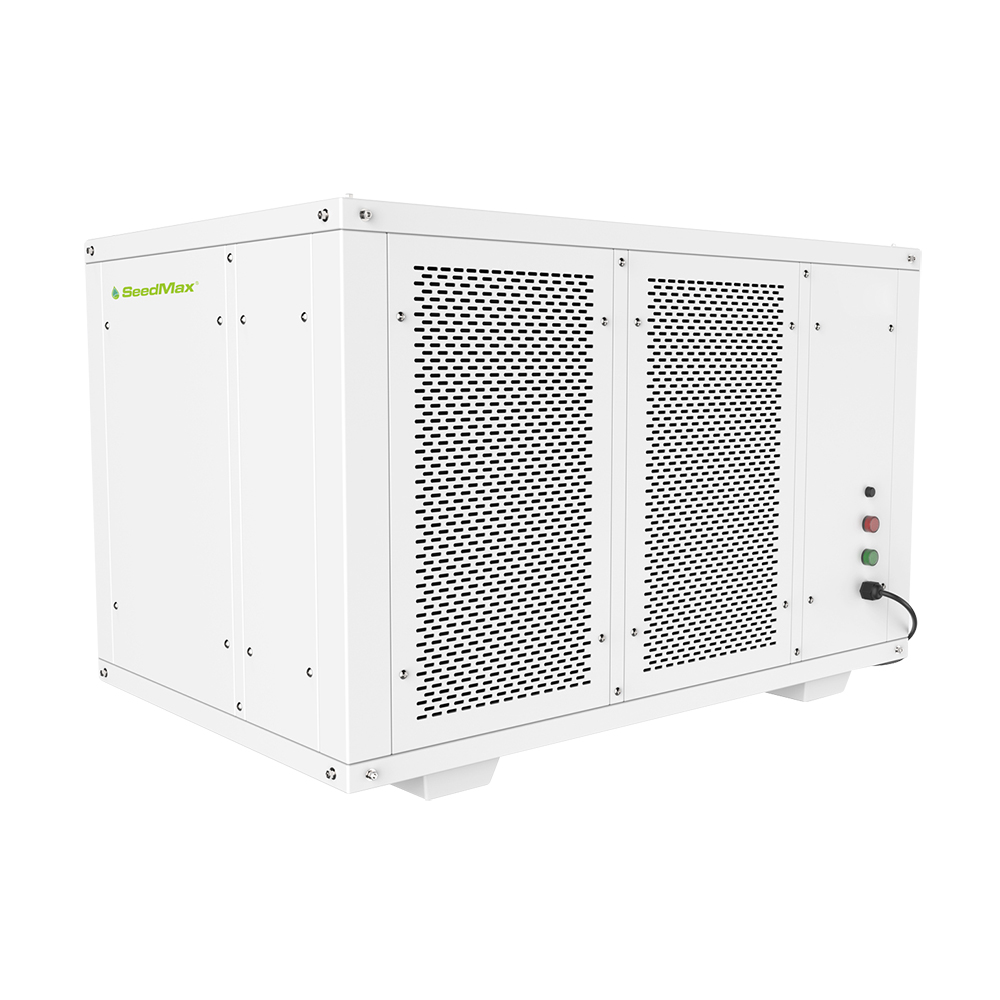
A quality greenhouse dehumidifier helps maintain stable humidity, especially during late flowering when dense buds are more susceptible to mold.
Consistent humidity control can help:
Reduce the risk of Botrytis (bud rot)
Improve environmental stability
Protect developing flowers
Potential warning signs include:
Small, airy flowers
Slow bud growth
Excessive new white pistils late in flowering
Weak aroma
Sparse trichomes
Foxtailing caused by heat or light stress
Buds remaining soft near harvest
If these symptoms occur, review environmental conditions, lighting, watering practices, and nutrient management.
There is no safe way to dramatically accelerate natural flower development. Instead, focus on providing optimal growing conditions:
Maintain stable temperature and humidity.
Provide adequate light intensity.
Water consistently without overwatering.
Ensure proper air circulation.
Support branches carrying heavy flowers.
Avoid major environmental fluctuations during late flowering.
Healthy plants naturally maximize bud size when conditions remain stable.
Recognizing bud swelling symptoms helps growers understand when cannabis plants are entering the final stage of flowering. Larger buds, swollen calyxes, increased trichome production, stronger aromas, and firmer flowers all indicate that the plant is directing its energy toward producing mature, harvest-ready buds.
Maintaining stable temperature, proper humidity, adequate lighting, and good airflow during this period supports healthy flower development while minimizing the risk of mold and other late-flowering issues.
 Hangzhou Hongtai Electrical Appliance Co., Ltd.
 info@seedmaxtech.com