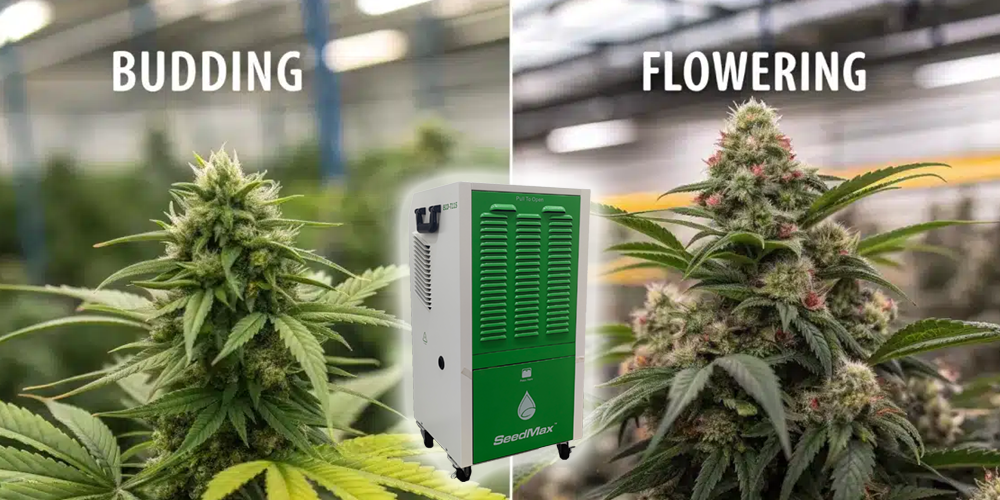
Maximizing bud size during flowering is fundamentally about optimizing energy allocation, environmental control, and stress management. You’re trying to push the plant to direct as much photosynthate as possible into flower mass without triggering stress responses.
During flowering, light becomes the primary yield driver.
Target: 600–1000 PPFD (without CO₂), up to ~1200 with supplementation
Spectrum: Red-heavy (around 660 nm) improves flower development
Maintain even canopy exposure (no shaded bud sites)
Ideal flowering range:
Temp: 68–78°F (20–26°C)
RH: 40–55%
VPD: ~1.2–1.5 kPa
This range:
Maximizes transpiration
Improves nutrient transport
Reduces mold risk
Shift from vegetative feeding to bloom nutrients:
Lower nitrogen (N)
Higher phosphorus (P) and potassium (K)
Key roles:
P → energy transfer (ATP), flower formation
K → water regulation, density, terpene production
Avoid overfeeding—nutrient burn reduces yield, not increases it.
A. Defoliation (Selective)
Remove large fan leaves blocking light to bud sites
Do NOT strip excessively—plants still need photosynthesis
B. Lollipopping
Remove lower, weak growth
Redirects energy to top colas
C. Even Canopy (SCROG if possible)
Keeps all buds in optimal light zone
Strong airflow prevents microclimates and improves gas exchange
CO₂ (optional but powerful):
Ambient: ~400 ppm
Enriched: 800–1200 ppm → faster growth, larger buds
Only effective if light and nutrients are already optimized.
Healthy roots = efficient nutrient uptake
Avoid overwatering (root hypoxia = smaller buds)
Maintain proper drainage
Use beneficial microbes if applicable
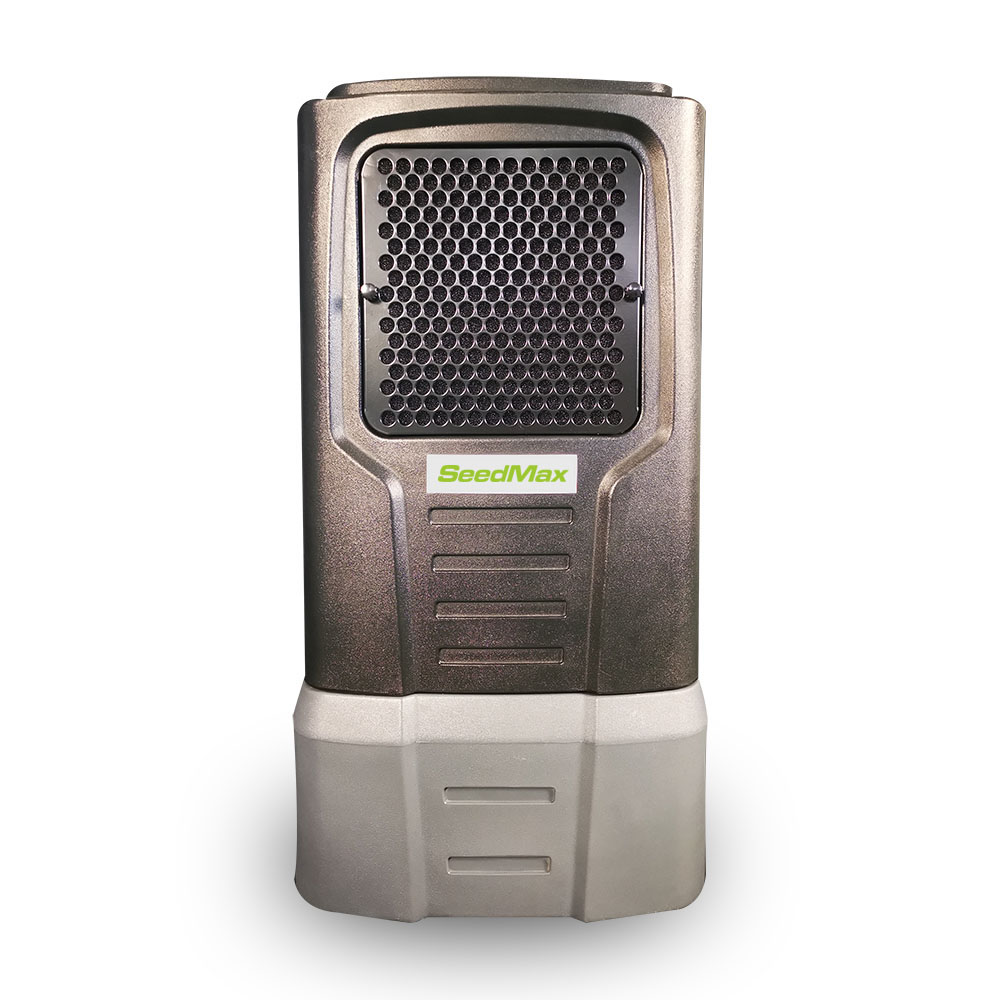
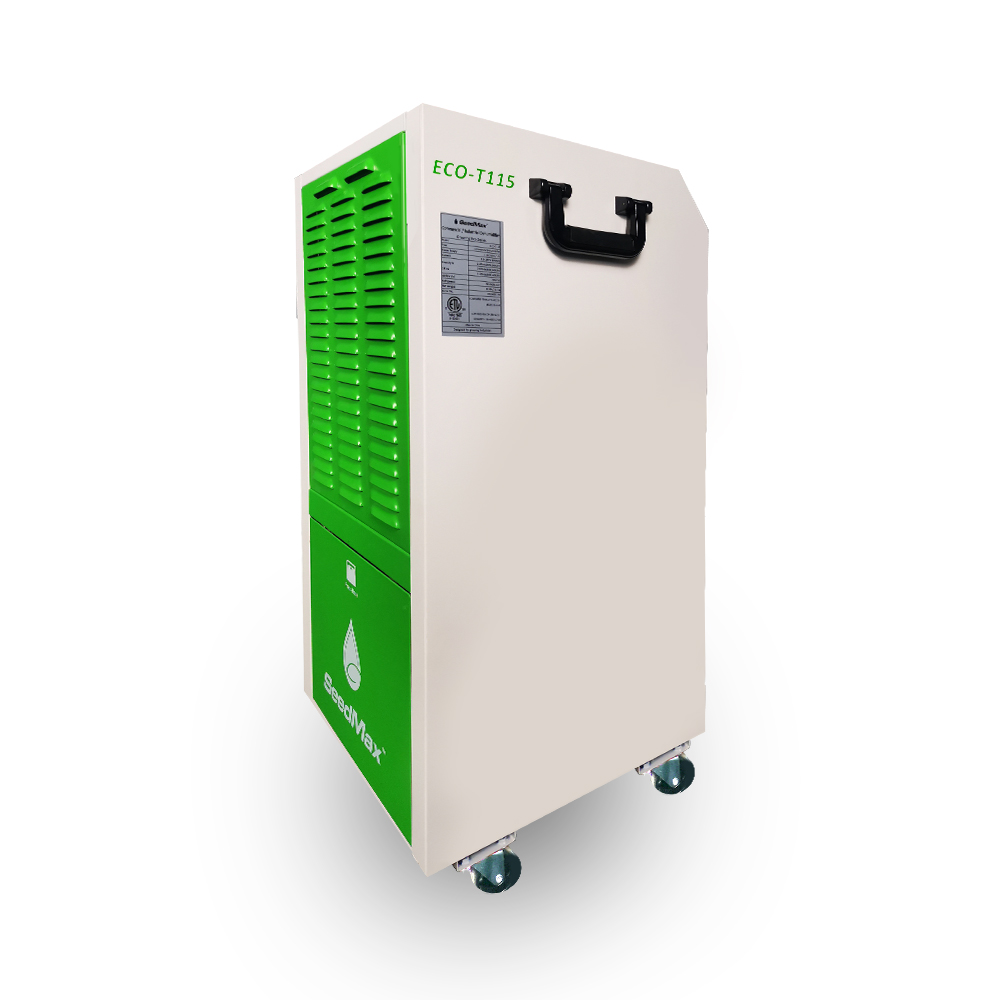
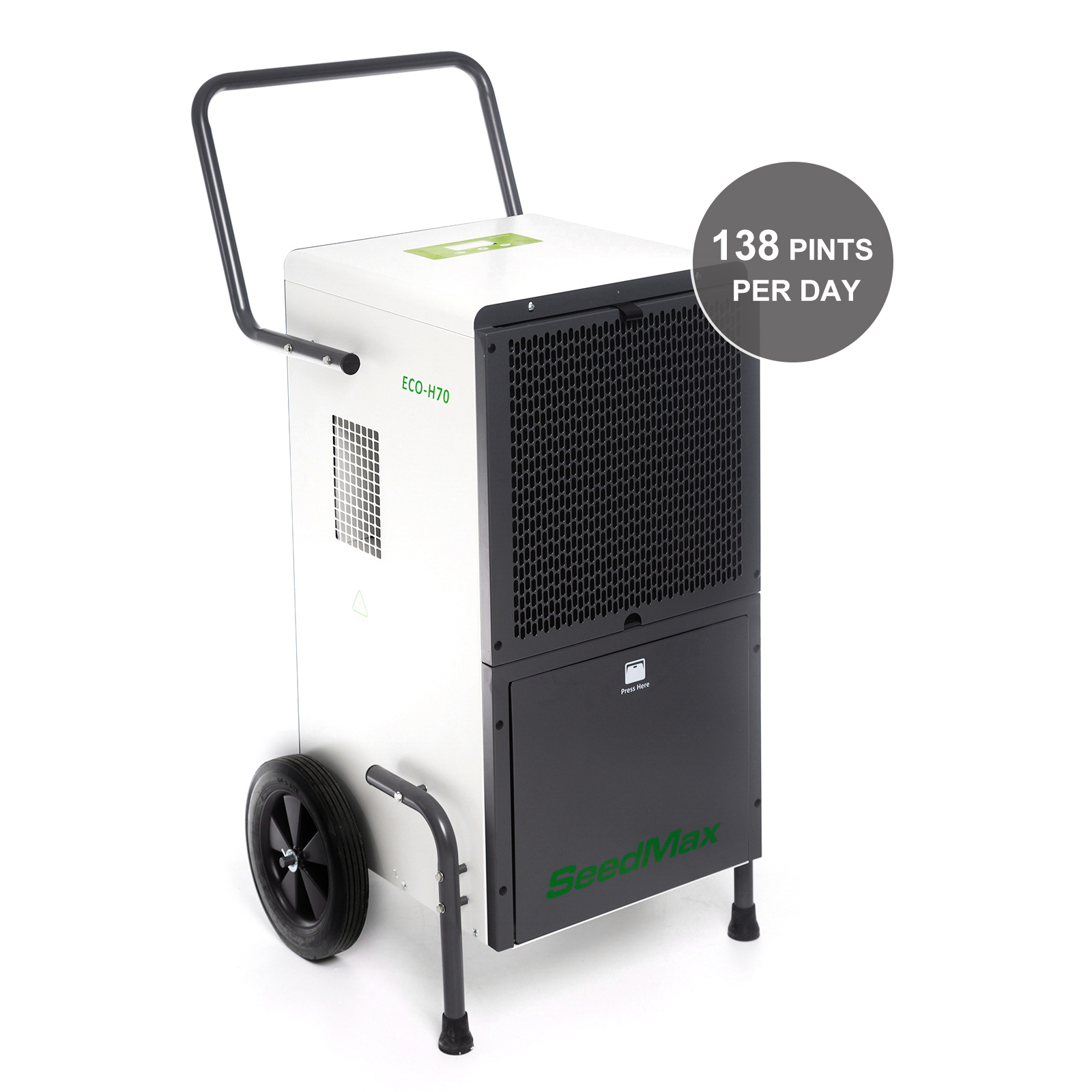
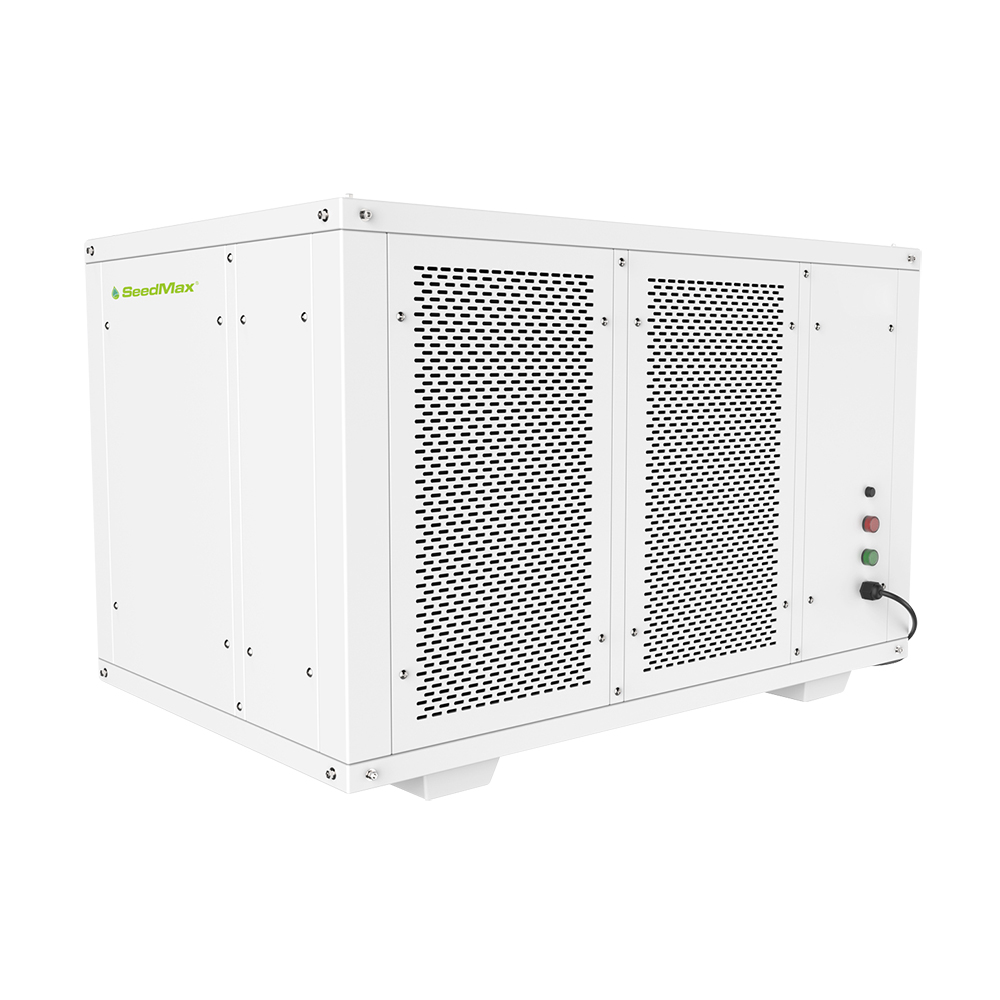
As buds bulk up, they trap moisture.
Keeps RH in optimal range
Prevents mold (which destroys yield)
Maintains consistent transpiration
This is especially important in dense canopies.
Stress reduces bud size immediately.
Avoid:
Temperature swings
Light leaks (can cause re-veg/herm issues)
Over-pruning late in flower
Nutrient shock
Weeks 1–3: Stretch phase → structure forms
Weeks 4–6: Bulk phase → buds gain mass rapidly
Weeks 7+: Ripening → density and resin production
Biggest size gains happen mid-flower, so conditions must be perfect then.
Even perfect technique won’t overcome poor genetics.
Some strains are naturally dense and high-yield
Others produce smaller, airier buds
Bigger buds come from:
High, balanced light energy
Proper VPD and humidity control
Efficient nutrient delivery
Smart canopy management
Miss any one of these, and yield potential drops significantly.
 Hangzhou Hongtai Electrical Appliance Co., Ltd.
 info@seedmaxtech.com