The greenhouse dehumidifier market in 2026 sits at the intersection of two rapidly expanding industries: controlled environment agriculture (CEA) and industrial dehumidification technology. As greenhouse cultivation becomes more advanced and climate-sensitive, humidity control is no longer optional—it is a critical infrastructure component.
While specific figures for greenhouse-only dehumidifiers are often embedded within broader HVAC or dehumidification segments, the overall market context is clear:
The global dehumidifier market is projected to reach ~$4.7–$5.2 billion in 2026
Expected long-term growth rate: ~5–7% CAGR (2026–2035)
Industrial and commercial applications (including greenhouses) account for a significant share (~40%+)
At the same time, the broader controlled environment agriculture market is expanding rapidly:
Expected to grow from $103B (2025) to $118B (2026) (~14% CAGR)
This expansion directly drives demand for greenhouse-specific humidity control systems.
1. Rapid Expansion of Controlled Environment Agriculture
Modern greenhouses—especially for cannabis, vegetables, and flowers—require:
Precise humidity control
Disease prevention (e.g., mold, mildew)
Yield optimization
As indoor and semi-closed growing systems scale, dehumidifiers become mission-critical equipment.
2. Climate Change & Rising Humidity Levels
Increasing global temperatures are raising ambient humidity levels:
More frequent extreme weather
Higher moisture loads in enclosed structures
This is a major macro driver for the entire dehumidifier market, especially in greenhouse environments where evaporation is constant.
3. Shift Toward High-Yield, High-Value Crops
Crops like:
Cannabis
Tomatoes
Leafy greens
require tight vapor pressure deficit (VPD) control, which depends heavily on dehumidification. This trend is accelerating adoption of:
High-capacity refrigerant systems
Desiccant dehumidifiers for precision control
4. Energy Efficiency & ESG Pressures
Sustainability is shaping purchasing decisions:
Demand for energy-efficient systems
Use of eco-friendly refrigerants
Integration with heat recovery systems
ESG (Environmental, Social, Governance) considerations are pushing manufacturers to innovate greener solutions.
1. Integrated HVAC + Dehumidification Systems
Combined cooling, heating, and humidity control
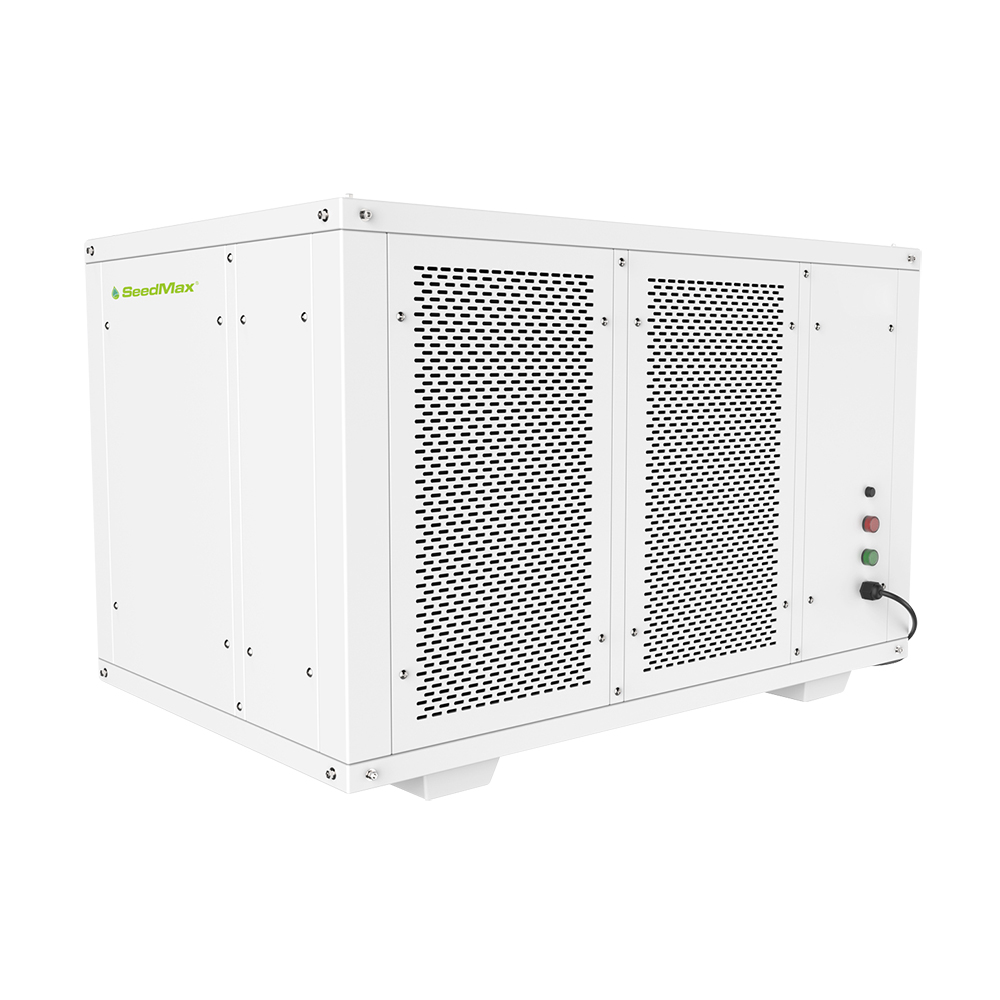
Ceiling mount dehumidifier is popular in large commercial greenhouses
2. Desiccant Dehumidification Growth
Dominates in low-humidity precision environments
Fastest-growing segment in several markets
3. Smart & Automated Systems
IoT-enabled humidity monitoring
AI-driven climate control
Integration with greenhouse management software
4. Heat Recovery Systems
Reuse waste heat to warm air or water
Improve overall system efficiency
North America
Strong demand driven by cannabis cultivation and advanced greenhouse farming
Largest share in the global dehumidifier market (~48%)
Europe
Focus on sustainability and energy efficiency
Advanced greenhouse infrastructure (e.g., Netherlands)
Asia-Pacific
Fastest-growing region due to:
Urban agriculture expansion
Food security initiatives
Rapid industrialization
Despite strong growth, several constraints remain:
High initial investment cost for industrial systems
Energy consumption concerns in large-scale operations
Complex system design and sizing requirements
Regulatory compliance for refrigerants and emissions
The market includes:
Global HVAC manufacturers
Specialized agricultural climate control companies
Key competitive strategies:
Product innovation
Energy efficiency improvements
Strategic partnerships with greenhouse developers
The greenhouse dehumidifier market is expected to:
Grow steadily in line with the broader dehumidifier market (~5–7% CAGR)
Outperform in niche segments like cannabis and vertical farming
Shift toward fully integrated climate systems rather than standalone units
In 2026, greenhouse dehumidifiers are transitioning from a supporting device to a core agricultural technology. Driven by climate challenges, precision farming, and sustainability demands, the market is poised for sustained growth—particularly in high-tech, large-scale greenhouse operations.
 Hangzhou Hongtai Electrical Appliance Co., Ltd.
 info@seedmaxtech.com