Proper dehumidifier placement is critical in a commercial cultivation facility because humidity distribution is rarely uniform. Incorrect placement can create microclimates, condensation, mold risks, and inconsistent plant growth.
In a grow room, the largest moisture source is plant transpiration. During the flowering stage, cannabis plants release significant amounts of water vapor into the air.
The best locations are usually:
Between plant canopy zones
Near irrigation-heavy sections
Close to dense plant clusters
Near drying or curing areas if connected
Avoid placing the unit directly against walls or in empty corners where airflow is weak.
A commercial dehumidifier works best when moist air can move freely through the machine.
Leave enough clearance around the unit:
At least 12–24 inches around air intake and exhaust areas
Avoid blocking vents with plants, racks, or walls
Keep airflow paths open
Commercial grow rooms typically combine:
Dehumidifiers
Horizontal airflow fans
Oscillating fans
HVAC systems
These systems should work together to prevent stagnant humid zones.
The dry exhaust air from a dehumidifier can stress plants if directed at the canopy continuously.
Avoid:
Pointing exhaust directly at leaves or flowers
Placing units too close to sensitive young plants
Creating hot dry spots
Instead:
Aim airflow across aisles
Let circulation fans distribute conditioned air evenly
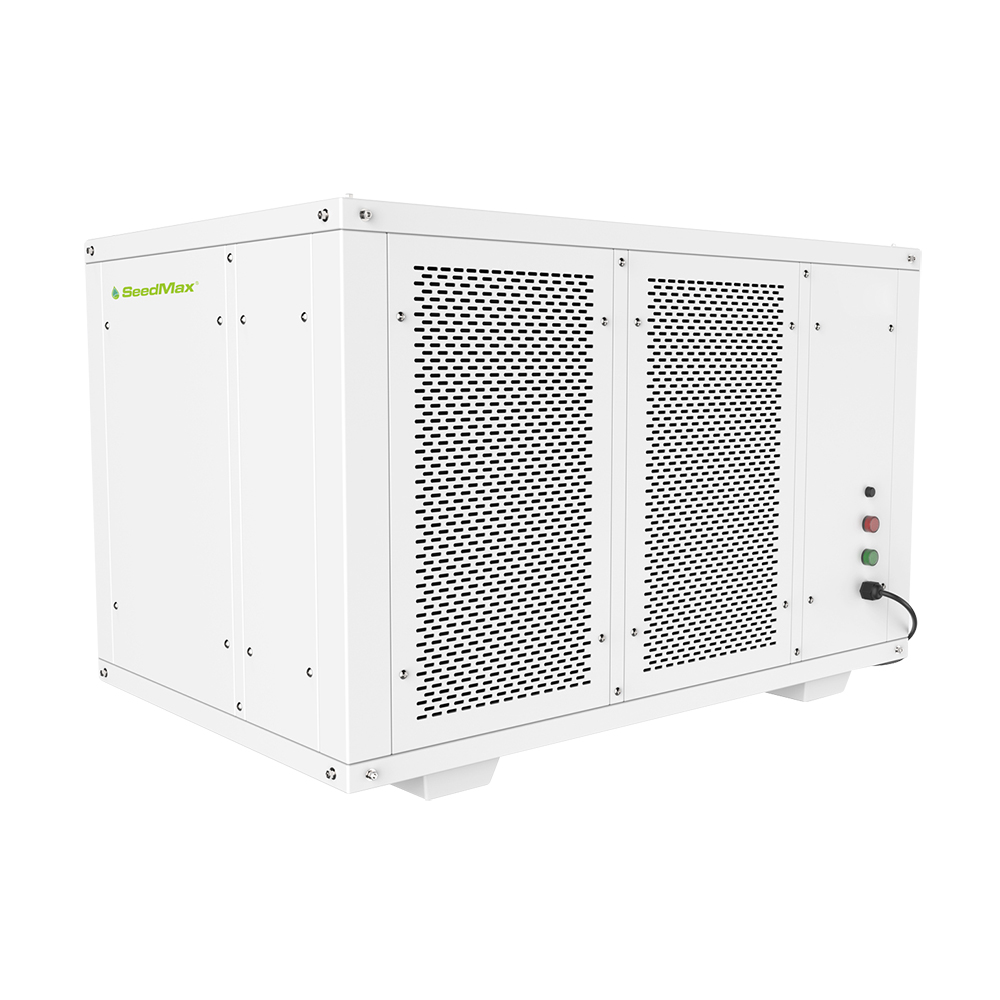
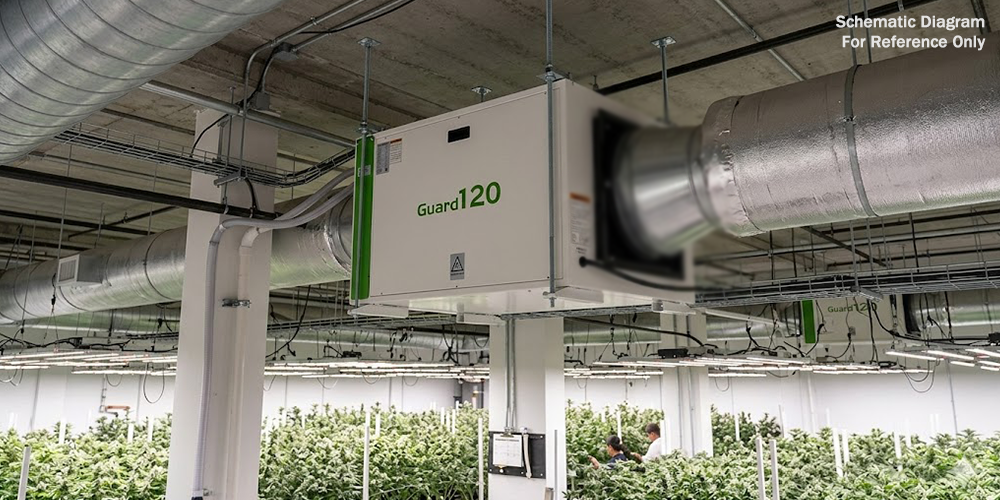
In sealed commercial grow rooms, placing ceiling mount dehumidifiers near HVAC return air pathways improves efficiency because humid air naturally migrates toward those areas.
Good placement options include:
Near central walkways
Adjacent to return vents
Along main airflow circulation loops
This helps maintain stable vapor pressure deficit (VPD) throughout the room.
Humidity tends to stratify depending on room conditions.
In some grow rooms:
Moisture accumulates near the canopy
Cooler damp air settles lower
Ceiling-mounted or suspended commercial dehumidifiers are common in:
Vertical farms
Rack cultivation systems
Large flowering rooms
Overhead installation:
Saves floor space
Improves airflow coverage
Reduces obstruction
Avoid placing units:
Next to open doors
Near wet floors
Beside evaporative cooling systems
Close to water reservoirs
External moisture intrusion forces the unit to work harder and reduces efficiency.
Use one centrally located unit with strong circulation fans.
Recommended setup:
Dehumidifier near center aisle
Oscillating fans above canopy
Intake and exhaust airflow balanced
Use multiple distributed dehumidifiers instead of one oversized machine.
Benefits:
More uniform RH control
Fewer humidity pockets
Better redundancy
Improved energy efficiency
Place units:
Evenly across cultivation zones
Near high-density canopy areas
Along airflow pathways
For multi-tier systems:
Install ceiling-mounted or ducted dehumidifiers
Ensure airflow reaches lower canopy levels
Prevent moisture buildup between racks
Humidity often becomes trapped between vertical layers.
For cannabis cultivation, relative humidity generally follows this pattern:
|
Growth Stage |
Recommended RH |
|
Seedling |
65–75% |
|
Vegetative |
55–70% |
|
Early Flower |
50–60% |
|
Late Flower |
40–50% |
|
Drying |
50–60% |
Maintaining stable humidity helps reduce risks of:
Powdery mildew
Botrytis
Bud rot
Slow drying
Nutrient uptake issues
Putting the Unit in a Corner: Corners often have poor airflow and dead zones.
Oversizing a Single Location: One large unit in one spot may leave distant canopy sections humid.
Ignoring Airflow Patterns: Dehumidification without circulation creates uneven environmental conditions.
Installing Too Close to Plants: This can over-dry nearby canopy sections and stress plants.
 Hangzhou Hongtai Electrical Appliance Co., Ltd.
 info@seedmaxtech.com