Maintaining the right growing environment is essential for producing healthy, high-yield plants. While many growers monitor air temperature and relative humidity, experienced cultivators increasingly rely on Leaf Vapor Pressure Deficit (Leaf VPD) to make more accurate climate control decisions. Unlike air VPD, Leaf VPD accounts for the actual temperature of the plant's leaves, providing a clearer picture of transpiration and water movement.
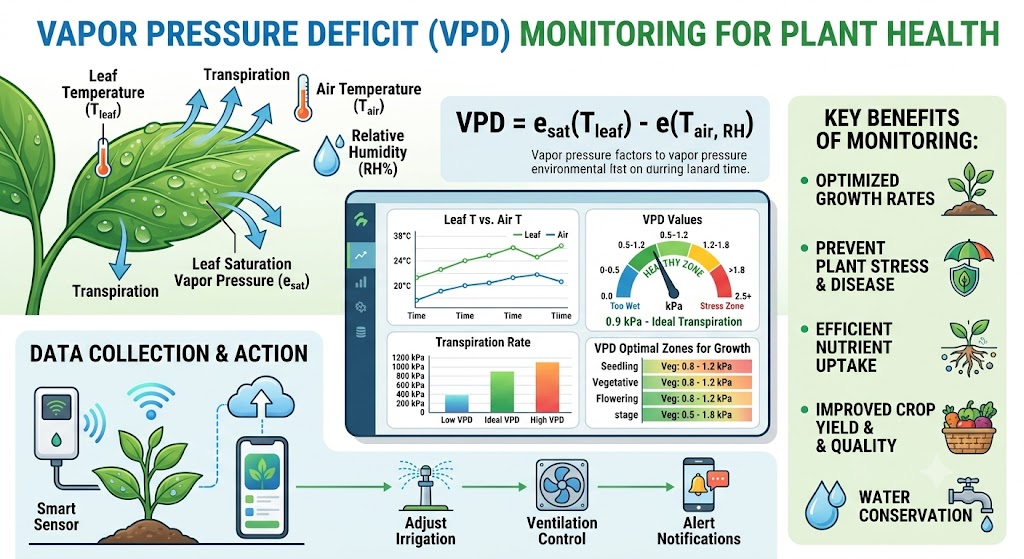
Leaf Vapor Pressure Deficit (Leaf VPD) is the difference between the moisture pressure inside a leaf and the moisture pressure in the surrounding air. It measures the driving force that causes water to evaporate from the leaf surface through tiny pores called stomata.
A properly managed Leaf VPD helps plants:
Regulate transpiration
Absorb nutrients efficiently
Maintain healthy stomata function
Increase photosynthesis
Reduce disease risk
Produce stronger growth and higher yields
Because leaves are often cooler than the surrounding air due to transpiration, Leaf VPD is generally more accurate than calculations based solely on air temperature.
Air VPD assumes that the leaf temperature is the same as the ambient air temperature. In reality, leaf temperature often differs by 1–3°C (2–5°F) depending on lighting, airflow, plant health, and transpiration.
For example:
Under LED lighting, leaves are often cooler than the air.
Under high-intensity HID lighting, leaves may become warmer.
Strong airflow can lower leaf temperature.
Water stress can increase leaf temperature.
Monitoring Leaf VPD provides a more precise understanding of the plant's actual growing conditions.
To calculate Leaf VPD accurately, you'll need the following tools:
An infrared thermometer measures the surface temperature of plant leaves without making contact.
For automated systems, infrared leaf temperature sensors continuously monitor canopy temperatures and transmit real-time data to climate control systems.
Place the sensor at canopy height, away from direct airflow or heat sources, to measure ambient temperature accurately.
Use a calibrated humidity sensor located near the plant canopy to monitor the surrounding moisture level.
Many modern grow controllers automatically calculate Leaf VPD after receiving leaf temperature, air temperature, and humidity data.
Several smartphone apps and online VPD calculators can also perform the calculations.
Step 1: Measure Air Temperature
Record the air temperature at the top of the plant canopy using a reliable digital sensor.
Step 2: Measure Relative Humidity
Record the relative humidity (%) near the same location.
Step 3: Measure Leaf Temperature
Aim the infrared thermometer at healthy mature leaves located in the center of the canopy.
Avoid measuring:
Wet leaves
Damaged leaves
Leaves under direct reflections
Edge leaves exposed to unusual airflow
Take multiple readings and calculate the average.
Step 4: Calculate Leaf VPD
Input the following values into a VPD calculator:
Air temperature
Relative humidity
Leaf temperature
The calculator automatically determines the Leaf VPD value.
Step 5: Compare With Recommended Ranges
Adjust your environmental controls if the measured Leaf VPD falls outside the target range for your crop and growth stage.
While ideal values vary by species, the following ranges are commonly used for indoor crops:
|
Growth Stage |
Recommended Leaf VPD |
|
Seedlings |
0.4–0.8 kPa |
|
Vegetative Growth |
0.8–1.2 kPa |
|
Early Flowering |
1.0–1.3 kPa |
|
Late Flowering |
1.2–1.5 kPa |
Always adjust these targets based on your crop variety, lighting system, and cultivation method.
Humidity is one of the easiest environmental factors to adjust. When relative humidity rises too high, Leaf VPD decreases, reducing transpiration and slowing nutrient uptake.
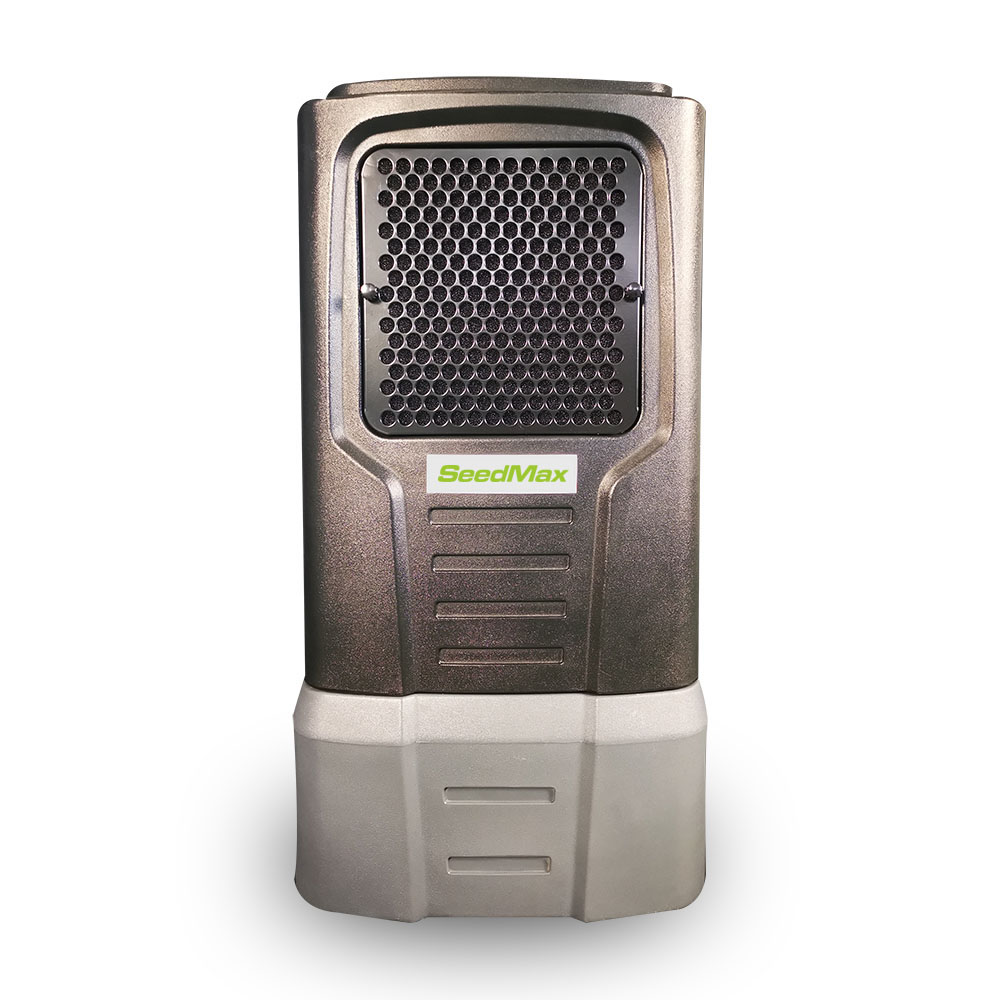
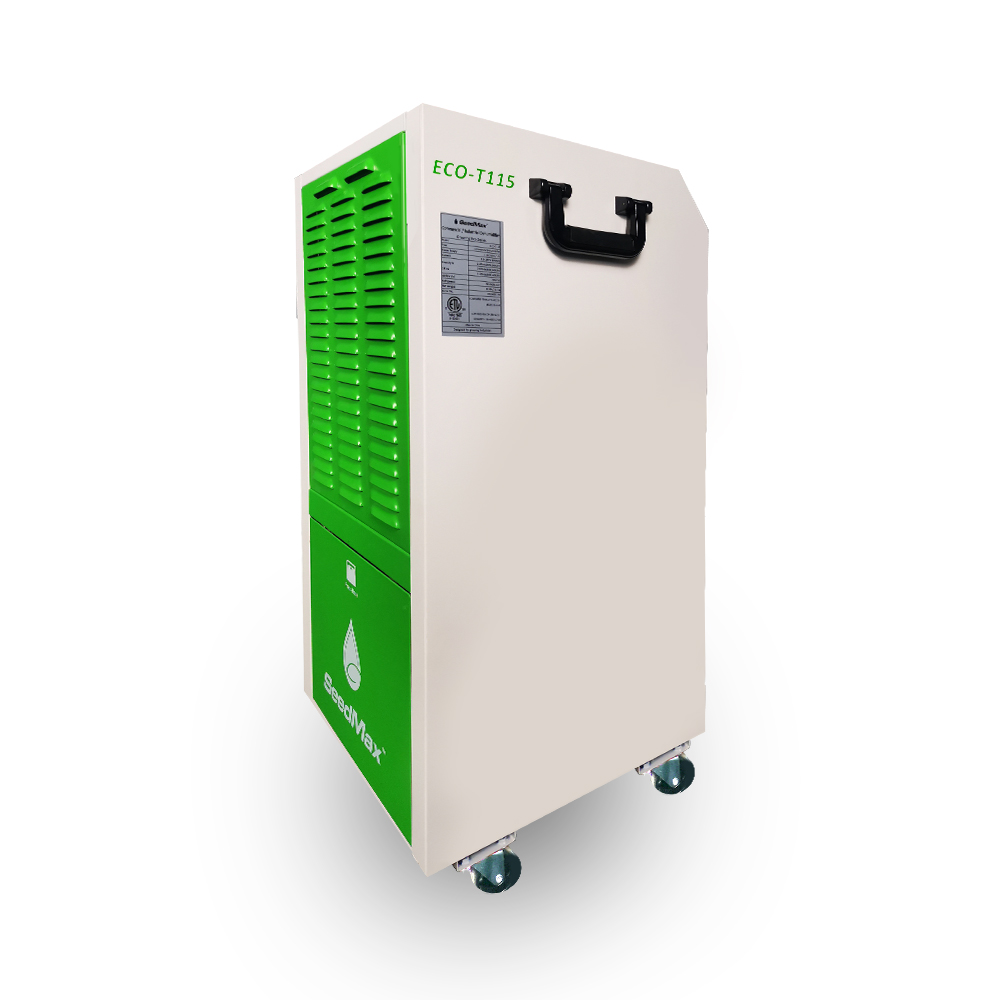
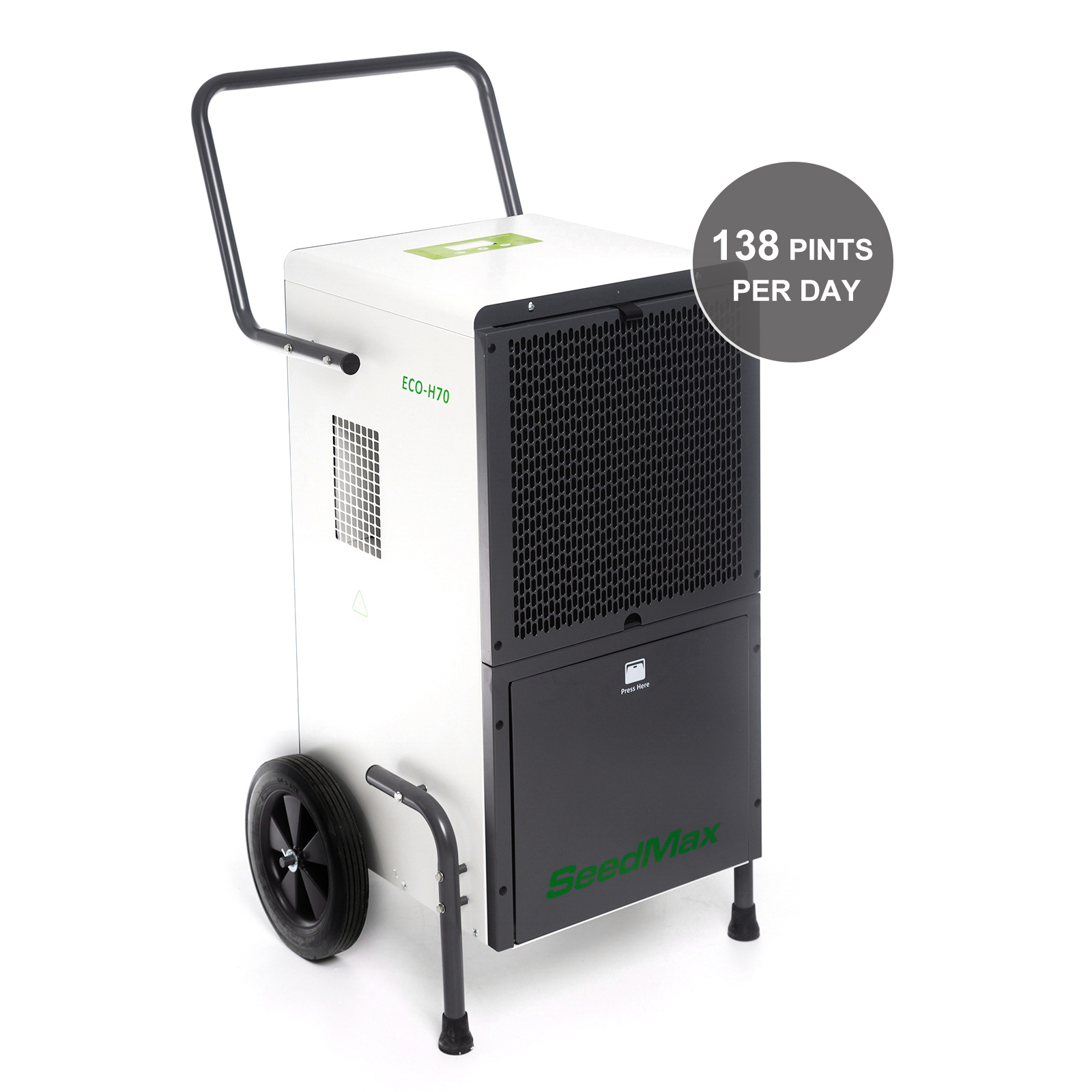
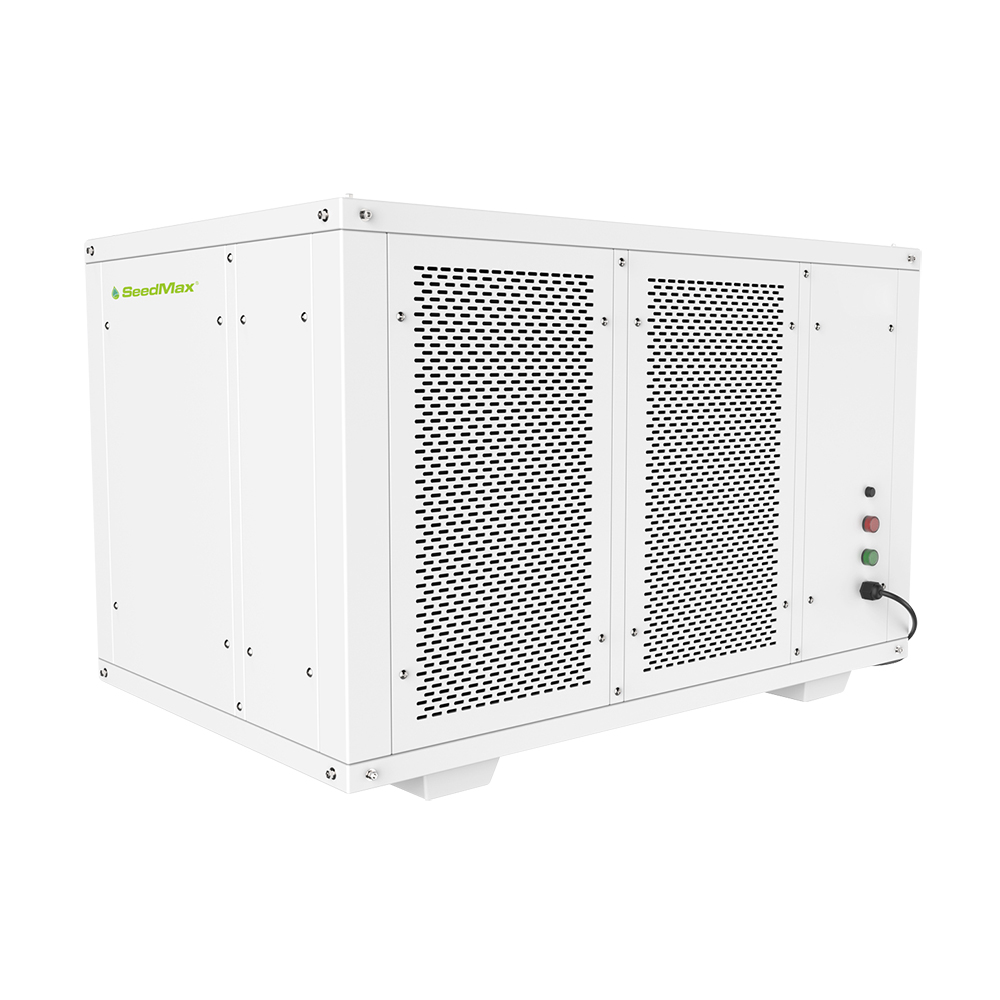
Industrial grow room dehumidifiers help maintain stable Leaf VPD by:
Removing excess moisture from the air
Preventing condensation
Reducing mold and mildew risks
Supporting consistent transpiration
Improving environmental stability during lights-off periods
Pairing a dehumidifier with environmental sensors allows for more precise climate management.
Avoid these common errors:
Measuring leaf temperature under direct light reflections
Using inaccurate humidity sensors
Taking measurements far above or below the plant canopy
Ignoring airflow differences within the grow room
Failing to recalibrate sensors regularly
Using only air temperature instead of actual leaf temperature
Accurate measurements are essential for reliable VPD calculations.
Many commercial cultivation facilities automate Leaf VPD monitoring using integrated environmental control systems.
These systems combine:
Infrared leaf temperature sensors
Air temperature sensors
Relative humidity sensors
CO₂ sensors
Industrial dehumidifiers
HVAC equipment
Environmental controllers
The controller continuously adjusts humidity, ventilation, and dehumidification to keep Leaf VPD within the desired range, reducing manual intervention and improving crop consistency.
Leaf VPD is one of the most valuable metrics for optimizing plant health and maximizing yields in controlled growing environments. By measuring leaf temperature, air temperature, and relative humidity, growers gain a more accurate understanding of plant transpiration than with air VPD alone.
Whether you're managing a small indoor grow room or a commercial greenhouse, combining accurate environmental sensors with reliable dehumidification equipment can help maintain stable Leaf VPD, reduce plant stress, and support healthier, more productive crops.
 Hangzhou Hongtai Electrical Appliance Co., Ltd.
 info@seedmaxtech.com