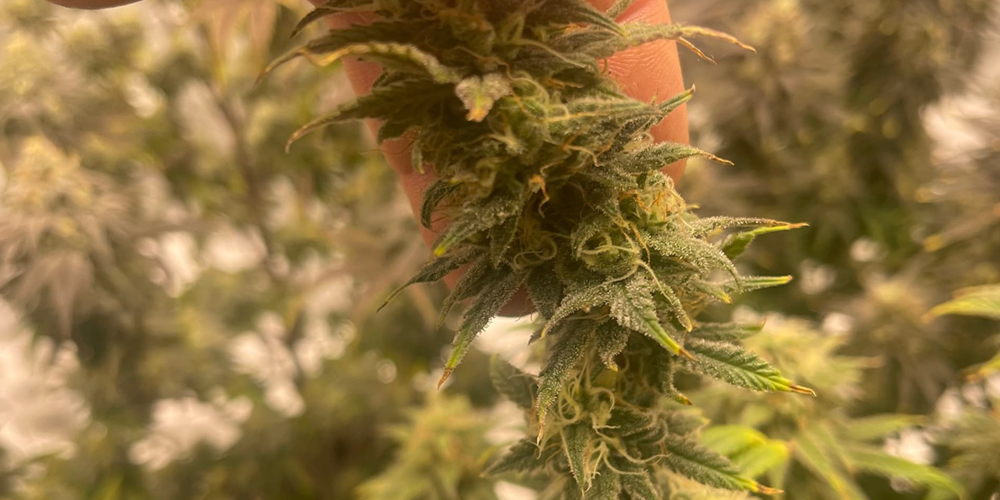
When cannabis buds are not swelling, the issue is almost always related to environmental control, nutrition balance, or plant stress during mid-to-late flower. Bud swell is a physiological response that occurs only when conditions are within a relatively narrow optimal range.
Bud swelling occurs primarily in:
Weeks 5–8 for most photoperiod strains
Final 2–3 weeks before harvest
If you are:
In early flower (weeks 1–3): lack of swelling is normal
Growing sativa-dominant genetics: swelling occurs later and more gradually
Action: Confirm actual flowering week based on pistil development, not calendar alone.
Symptoms
Tall plants with small, airy buds
Good leaf growth but poor flower mass
Causes
Insufficient PPFD
Uneven canopy
Excessive distance from lights
Targets (Flower Stage)
PPFD: 700–900 µmol/m²/s (without CO₂)
DLI: 35–45 mol/day
Light height: Adjust to maintain uniform canopy exposure
Action: Improve canopy leveling and verify actual light intensity (do not rely solely on wattage).
Improper VPD is a primary reason buds fail to bulk up.
Optimal Late-Flower Conditions
|
Parameter |
Target |
|
Day temp |
72–78°F (22–26°C) |
|
Night temp |
65–70°F (18–21°C) |
|
RH (late flower) |
40–50% |
|
VPD |
1.2–1.5 kPa |
Common Errors
RH too high (>55%) → poor transpiration
RH too low (<35%) → plant stress
Large day/night temperature swings
Action: Use a dehumidifier and stable HVAC control; avoid chasing RH without considering temperature.
Likely Issues
Low potassium (K): weak bud density, slow swell
Overfeeding nitrogen (N): leafy buds, delayed bulking
Lockout due to incorrect pH
Targets
Reduce nitrogen after week 3 of flower
Increase K demand during weeks 5–7
Maintain correct root-zone pH:
Soil: 6.2–6.8
Coco/hydro: 5.8–6.2
Action: Review EC/PPM trends and runoff pH; do not blindly add PK boosters.
Improper watering limits nutrient uptake even if nutrients are present.
Problems
Overwatering → oxygen-starved roots
Chronic underwatering → stress response
Action: Allow proper wet–dry cycles and ensure adequate root-zone aeration.
Airflow
Inadequate circulation reduces transpiration and nutrient flow
Excessive direct airflow dries flower surfaces
Action: Gentle, indirect airflow across the canopy.
CO₂ (Optional but Significant)
Ambient CO₂ limits yield under high light
With enrichment:
CO₂: 900–1,200 ppm
Increase temperature slightly (up to ~82°F / 28°C)
Some plants will never produce dense buds, regardless of conditions.
Consider:
Genetics (landrace or haze varieties)
Excessive stretching due to weak early flower light
Poor training or overcrowding
Action: Evaluate cultivar expectations honestly.
Any of the following can stall flower development:
Light leaks during dark cycle
Pest pressure
Heat stress
Root-bound plants
Inconsistent environment
 Hangzhou Hongtai Electrical Appliance Co., Ltd.
 info@seedmaxtech.com